This compound requires bacteriostatic water for reconstitution
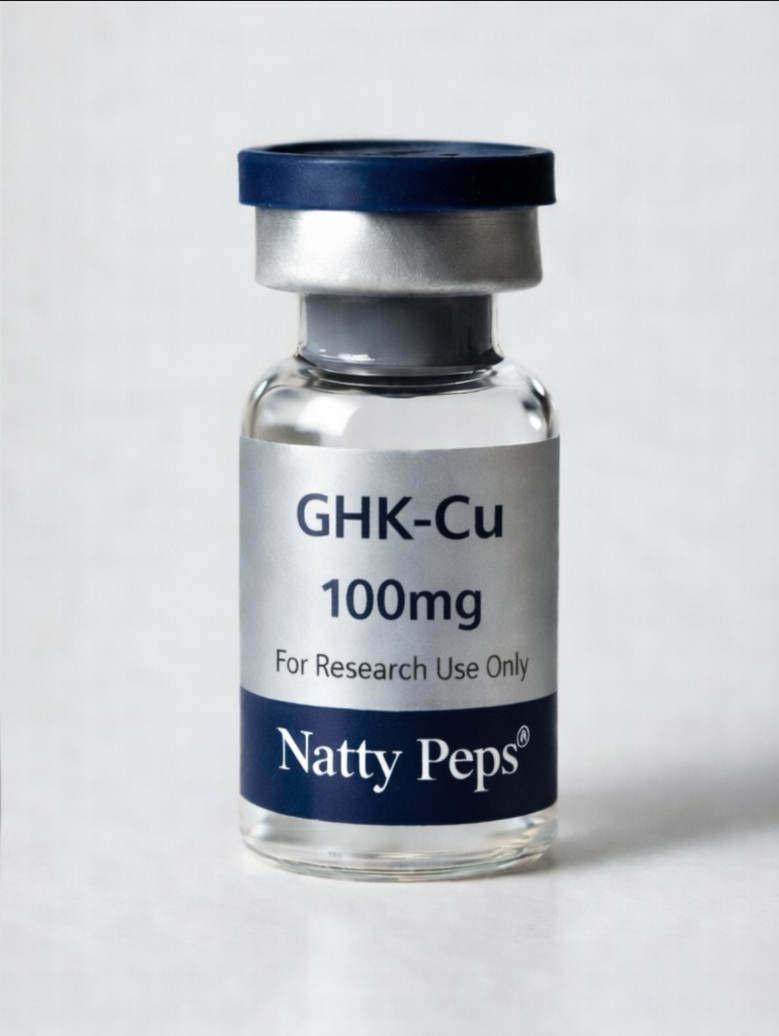
GHK-Cu
Price range: $188.99 through $303.99
GHK-Cu is a copper-binding tripeptide widely utilized in laboratory research for the study of cellular signaling, gene expression modulation, and tissue remodeling pathways. It is commonly investigated for its role in copper ion transport and its influence on cellular communication processes related to extracellular matrix dynamics, protein synthesis signaling, and regenerative pathway activity in controlled experimental models.
In research environments, GHK-Cu is used to explore mechanisms associated with collagen regulation, cellular differentiation, and oxidative stress response pathways. Its ability to interact with multiple biological systems makes it valuable for examining complex signaling networks involved in tissue integrity, cellular repair processes, and biochemical pathway regulation. The stability of the peptide-copper complex allows for consistent and repeatable experimental outcomes across a range of laboratory protocols focused on cellular adaptation and structural protein interactions.
Reconstitution (For Research Reference Only):
Add 2mL of bacteriostatic water to achieve a concentration of 10mg/mL. At this concentration, each 0.1mL (10 units on a standard insulin syringe) corresponds to 1mg of compound. This information is provided strictly for laboratory research standardization and measurement purposes.
This product is supplied in lyophilized (freeze-dried) form within a sealed vial to ensure stability and precision in handling. It is intended exclusively for laboratory research, analytical, and educational purposes and is not approved for—and must not be used for—human or animal consumption.
| Dosage | 100mg x10, 50mg x10 |
|---|---|
| Purity | GHK: 99.8%, Copper Content: 11.7% |
| More info | For Full COA and Purity Test Results, Email us nattypeptidesmain@gmail.com |